REVIEW · MUNICH
Superior E-Bike Tour incl. 3rd Reich Sites & a beer Garden Stop
Book on Viator →Operated by Mikes Bike Tours Munich · Bookable on Viator
This bike tour keeps Munich’s story moving. You’ll ride past Third Reich sites and stop at places tied to the rise and fall of Nazi power, then keep going with context and room for questions.
I especially like two things: the route strings together big, specific landmarks (Odeonsplatz, Königsplatz, Feldherrnhalle, and more) and the guiding is interactive, not just a read-a-fact-and-move-on script. You’ll also get that “see more than on foot” advantage because the e-bike does the heavy lifting.
One thing to consider: the content is heavy and sometimes unsettling, so it helps to be ready for serious history while you ride.
In This Review
- What makes this tour work so well
- Arriving at Marienplatz: walking first, then rolling
- Odeonsplatz and the Feldherrnhalle: where rallies and consequences meet
- The Hofbräuhaus area: beer hall proximity and early speeches
- Max-Joseph-Platz and opera-adjacent power: culture near politics
- Königsplatz: classical architecture meets Nazi propaganda
- Schwabing’s bohemian edge: why “free spirits” mattered
- Haus der Kunst: a museum with Nazi origins
- Englischer Garten: the beer-and-breathing break
- The Jewish heart of Munich: St-Jakobs-Platz and the new synagogue site
- The beer garden stop: snacks are yours, but the reset is included
- Duration, group size, and what it feels like on the road
- English guiding and “ask as we go” energy
- Price and value: what $93.92 actually gets you
- Who should book this tour, and who might skip it
- Should you book it?
- FAQ
- How long is the tour?
- What time does the tour start in Munich?
- How much does the tour cost per person?
- Is the tour guided and in English?
- What’s included in the ticket price?
- Are food and drinks included?
- Where does the tour start and end?
- How big is the group?
- What should I bring or wear?
What makes this tour work so well
- A tight loop of key sites tied to the 1920s Nazi push (including the Beer Hall Putsch area and nearby squares)
- Small-group feel with a maximum of 14 travelers
- Real Munich geography, not just plaques: you bike from central squares out toward major parks and cultural districts
- Englischer Garten time to switch gears with green space and iconic spots
- A beer garden reset in the middle, with snacks paid on your own
- Guides who can explain and keep pace, even when the topic turns dark
Arriving at Marienplatz: walking first, then rolling
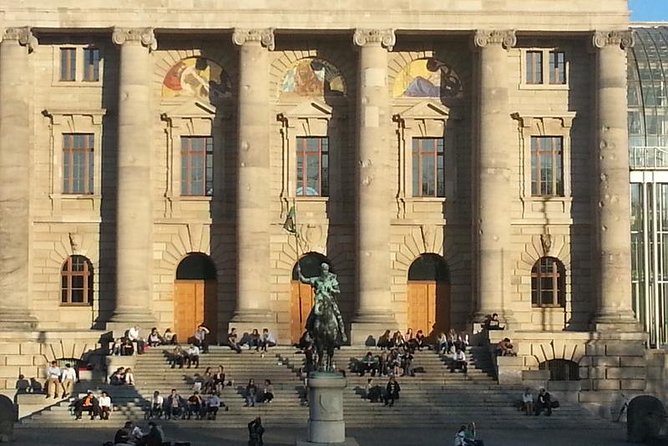
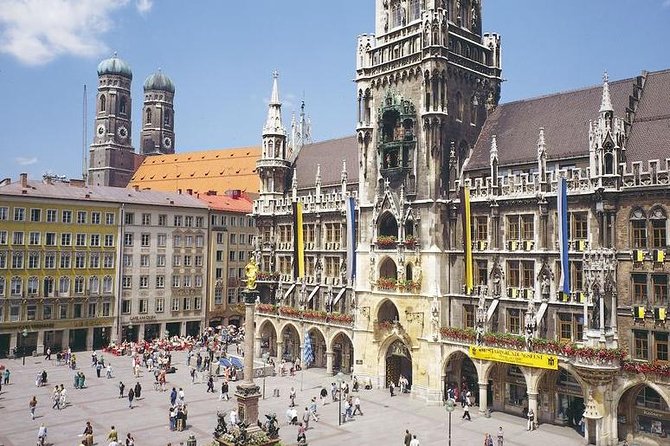
Most Munich days start with grand squares, and this one does too—at Marienplatz, the city’s central meeting point. The tour begins with a short walk around the square because bikes aren’t allowed there. That’s a smart move: it gives you a quick orientation for where you are and how the streets connect before you actually hit the saddle.
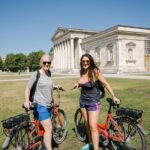
Then you switch to e-bike mode. You’ll pick up your bike and wear a protective helmet before you ride off at an easy pace. This matters more than it sounds. Munich streets can look simple on a map, but bikes and pedestrians share space, and a calm start helps everyone get comfortable with the route.
You can also read our reviews of more tours and experiences in Munich.
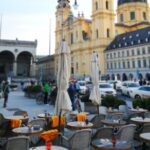

Odeonsplatz and the Feldherrnhalle: where rallies and consequences meet
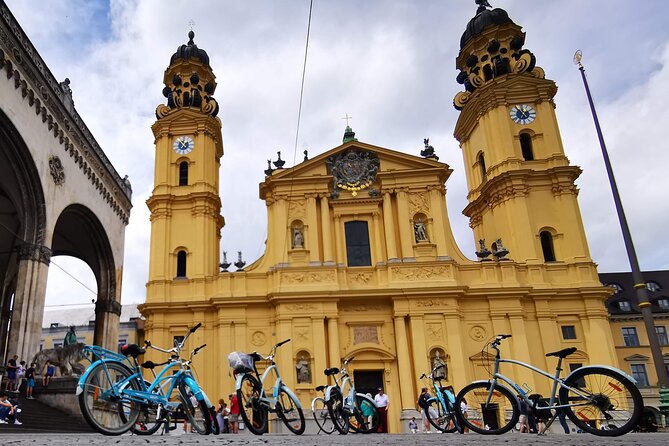
Odeonsplatz is one of those squares where architecture and politics collide. You’ll see the Theatinerkirche and the Feldherrnhalle’s loggia-style presence, and you’ll get the gist of why this location became such a stage.
The key story here is the failed Beer Hall Putsch in 1923—when tensions between Nazi supporters and Bavarian authorities erupted into violence at the Feldherrnhalle area. The square has seen political demonstrations before the Nazis, but the 1923 event is the moment where it gets a darker label in Munich’s memory.
You’ll also hear how the site changed after the Nazis took power, including how it was used as a kind of shrine for the putsch narrative. Later, after the war, Nazi symbols were removed and it returned to its role as a historical monument. That history-of-a-place approach is useful: it helps you read the buildings and not just memorize names.
Practical note: expect solemn moments and a respectful tone. Even when the guide keeps things moving, this is not a comedy stop.
The Hofbräuhaus area: beer hall proximity and early speeches
A major selling point of this tour is that it doesn’t keep the Nazi story locked inside a museum. You’ll cycle past Hofbräuhaus, a place you can already associate with Munich’s beer hall culture, and your guide connects that setting to early Nazi-era propaganda moments—specifically, Hitler speeches tied to the movement’s growth.
This is one of the tour’s most unsettling strengths. Seeing how ideology was sold in ordinary social spaces helps you understand something people often miss: manipulation wasn’t only done in secret rooms. It was performed in public, in places that feel familiar and welcoming.
If you’ve ever wondered how a political movement built momentum before it had total control, this part of the ride gives you a clearer answer. You’re not only learning what happened—you’re learning why places like this mattered.
Max-Joseph-Platz and opera-adjacent power: culture near politics
As you work through the center, you’ll pass Max-Joseph-Platz, framed by landmarks that scream Munich’s royal and cultural heritage. The Residenz and the National Theatre (Bayerische Staatsoper) are right there, and the square functions as an open-air gathering point for events and everyday city life.
Why is this stop included on a Third Reich tour? Because it’s a reminder that Nazi history played out inside a living city, not in a separate world. Munich wasn’t only rallies and marches. It was also opera, theater, and palace grandeur—spaces that can make it easy to forget how rapidly public life can be warped.
You don’t spend long here, but the short stop gives you a contrast that makes the serious stops land harder.
Königsplatz: classical architecture meets Nazi propaganda
Königsplatz is where the tour really shifts gears intellectually. You’ll see how the square was commissioned in the 19th century with a plan to showcase classical Greek-style architecture, and how museums like the Glyptothek and collections like the Staatliche Antikensammlungen helped define it as a cultural hub.
Then the story turns. During the Nazi regime, Königsplatz became a site for rallies and propaganda events, and the context around the area changed because of nearby Nazi power structures—like the Brown House being located nearby.
This stop teaches you a key reading skill: architecture doesn’t carry only one meaning. It can be borrowed for different messages over time. Once you understand that, the squares stop feeling like postcards and start feeling like evidence.

Schwabing’s bohemian edge: why “free spirits” mattered
The tour also includes Schwabing, a district with a reputation that traces back to artists, writers, and intellectuals. In the early 20th century, it was known for an avant-garde boom and a more unconventional mood.
After the war, Schwabing kept that arts-and-student energy, though it’s become more gentrified and tourist-friendly over time. In a Third Reich-focused route, this stop adds balance. It nudges you to think beyond only the machinery of dictatorship. You start seeing the social landscape that produced both cultural change and political vulnerability.
You won’t leave with a sociology degree, but you will leave with better context for how people lived around the movement—not just what the movement did.
Haus der Kunst: a museum with Nazi origins
You’ll also visit Haus der Kunst, and this is one of the most important stops on the whole ride because it’s a direct example of how institutions can be repurposed.
The building was commissioned and opened under the Nazi regime as the House of German Art in 1937, with the goal of showcasing art the regime considered acceptable while rejecting what it labeled degenerate art. During World War II, it was used for other wartime purposes.
After the war, it was repurposed again—this time into a museum for international contemporary art. Today it hosts major exhibitions and also deals with the fact that its origin story is morally loaded. That focus on modern art plus the awareness of what came before makes the stop feel more honest than a “clean” museum experience.
If you care about how history shows up in buildings you’ll actually pass every day, this place is a strong argument for why a guided tour adds value.
Englischer Garten: the beer-and-breathing break
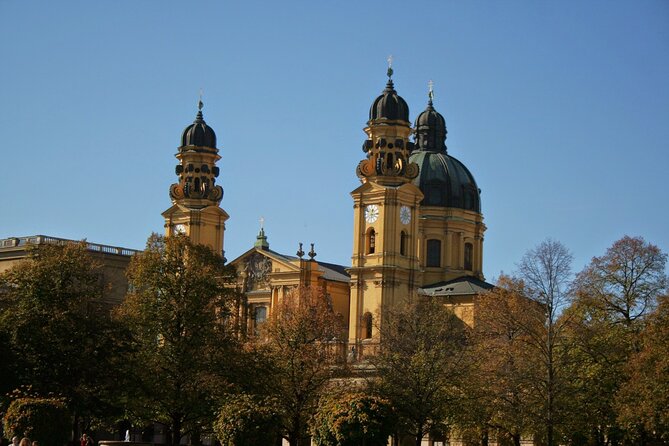
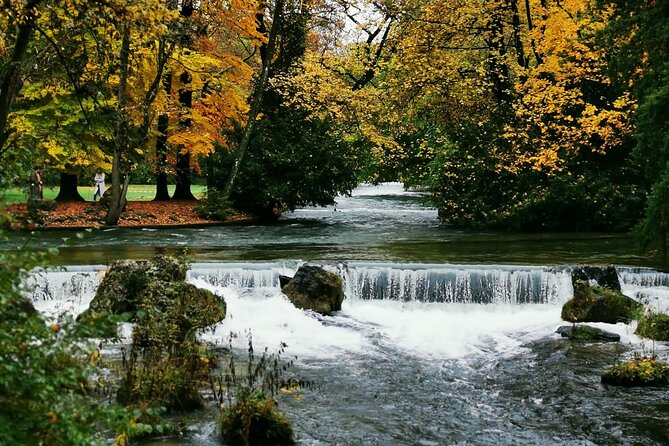
The ride reaches Englischer Garten, one of the world’s largest urban parks. This is where Munich’s pace changes. You’re in an enormous green area where people jog, cycle, picnic, and generally reset.
The tour calls out a few landmark attractions, including the Chinese Tower (which is also known for a beer garden), the Eisbach Wave (a famous urban surfing spot), and the Monopteros, a Greek-style temple used for panoramic views.
This matters because it gives you a mental breather after the darker stops. It’s not about “forgetting” the past. It’s about making room so you can absorb what you just learned.
The Jewish heart of Munich: St-Jakobs-Platz and the new synagogue site
This tour also brings you to St-Jakobs-Platz, described as the Jewish heart of the city and the site of the new Jewish Synagogue. This is a necessary counterweight to the Third Reich focus: it reminds you the story is not only about persecution. It’s also about continuity, community, and rebuilding.
The stop is brief, but it sets context for why the lessons of Munich’s darkest era are not just academic. This is modern Munich history—still lived in neighborhoods and institutions.
The beer garden stop: snacks are yours, but the reset is included
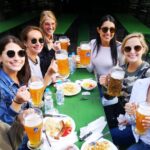
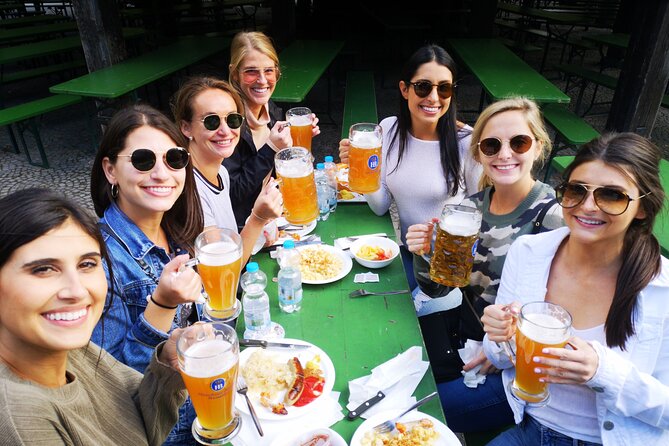
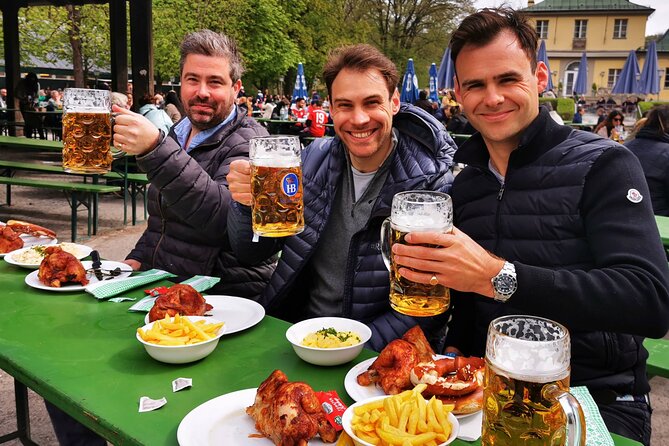
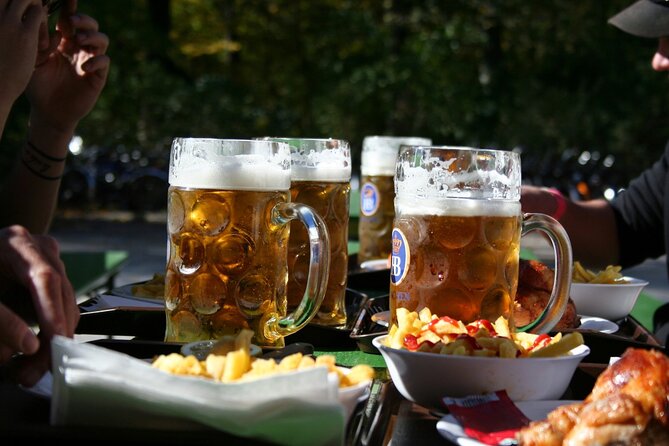
In the middle of the route, you’ll get a traditional Munich beer garden break. Snacks are at your own expense, but the timing is planned so you can recharge without derailing the tour.
This is more than a casual pit stop. It’s part of the tour’s pacing strategy. After a run through political violence and propaganda spaces, the park and beer garden help you keep your energy without rushing through everything.
If you’re budgeting, treat this as the only real “extra cost” you’ll likely add beyond the ticket price, since food and drinks aren’t included unless the operator specifies otherwise.
Duration, group size, and what it feels like on the road
The tour runs about 5 hours and typically fits travelers who want a full morning block without the slow burn of a day-long walking tour. The group maximum is 14 travelers, which keeps it from turning into a herd. You’re also on a bike the whole time except for the initial Marienplatz orientation where cycling isn’t allowed.
Most riders will like the leisurely pace. But you should still be honest about your biking comfort. A bike tour doesn’t forgive uncertainty. If you’re wobbly on a bike, the easiest thing you can do is practice a little beforehand.
One review-based tip worth taking seriously: make sure you understand the expectations about riding safely and being able to follow international road signals (green means go, red means stop). In cities, that’s not optional.
English guiding and “ask as we go” energy
The tour is offered in English, and the best moments come when you can ask questions while you ride. The guides on this route are praised for handling serious content with an active teaching style—people cite guides like Simon, Chris, Will, and Jack as strong at explaining the rise of Nazism step by step while keeping the tour upbeat and moving.
That combination is rare. It can be easy for history tours to turn into a long lecture on foot. Here, the bike flow gives you time to think between stops, and the guide can answer in the moment.
If you want a tour where you’re not just listening to dates, this interactive format helps.
Price and value: what $93.92 actually gets you
At $93.92 per person for about 5 hours, this is priced like a serious guided experience rather than a basic “see the sights” stroll. Here’s what you’re paying for in practical terms:
- A professional guide who handles the complex story of Munich’s Third Reich-era sites
- Use of a bike and helmet, which matters because it multiplies how much you can cover
- A focused route that hits major squares and key locations in a single morning
If you were to rent an e-bike on your own and try to connect these sites without context, you’d likely spend a lot of time figuring out where to go next. The value here is the sequencing and the explanations that help you understand why these places are grouped together.
This price also makes sense for people who want history content without paying museum-ticket overhead for everything on their own—since several stops are noted as free with admission ticket free.
Who should book this tour, and who might skip it
This tour is a good fit if you want:
- A Munich morning that covers major landmarks beyond what you’d see with casual sightseeing
- A Third Reich-focused route with explanations designed for real understanding, not just a list of stops
- A break built in via Englischer Garten and a beer garden stop
You might choose another option if:
- You want a light, purely scenic bike ride
- You’re looking for deep museum time instead of outdoor historical stops and interpretive context
Should you book it?
I’d book this if you’re the type of traveler who likes seeing the city’s “why,” not just its “what.” The pairing of big squares (Odeonsplatz, Königsplatz, Feldherrnhalle), cultural contrast (Max-Joseph-Platz, Haus der Kunst), and a reset in Englischer Garten makes it feel like a whole Munich experience instead of a single-theme walking tour.
Just go in prepared for serious subject matter, and plan your comfort: wear comfortable clothes and shoes, bring rain gear, and in summer add sunscreen. If you can ride confidently and you’re okay with a guided discussion-heavy style, this is strong value for a focused 5-hour morning.
FAQ
How long is the tour?
It’s about 5 hours.
What time does the tour start in Munich?
The start time is 9:30 am.
How much does the tour cost per person?
The price is listed as $93.92 per person.
Is the tour guided and in English?
Yes. It includes a professional guide, and it’s offered in English.
What’s included in the ticket price?
You get the professional guide and use of a bike and helmet.
Are food and drinks included?
Food and drinks are not included unless specified. The beer garden stop includes snacks at your own expense.
Where does the tour start and end?
It starts at Munich Stories – Stadtführungen München on Marienplatz 15, 80331 München. It ends at Mike’s Bike Tours & Rentals (cnr Hochbrückenstrasse, Bräuhausstraße 10, 80331 München).
How big is the group?
The tour has a maximum of 14 travelers.
What should I bring or wear?
Wear comfortable clothes and shoes, plus rain gear. Sunscreen is recommended in summer.