REVIEW · MUNICH
Private Munich History and Beer Culture Walking Tour
Book on Viator →Operated by BayernTrips LLC · Bookable on Viator
Munich’s beer stories start right in the street. This private history and beer culture tour pairs classic sights like the Frauenkirche and Glockenspiel with Bavarian food and brewing context you usually miss when you wander alone. I love the way the day ties landmarks to what people drank, ate, and believed, and I also like that it can be customized to your interests within a small group of up to 6. One thing to consider: most of the day is walking in pedestrian-heavy zones, and the beer portion costs extra since tastings are pay-as-you-go.
In a first-time-city kind of way, this feels like a smart orientation plus a deepening of the beer question. You’ll move through the old town with a professional local guide, and you can lean toward more history or more beer culture depending on what you care about most.
It’s priced per group at $485.23 for up to six people (so the value gets much better the fuller your group is). If you’re traveling solo or as a pair, you’ll want to weigh that cost against how much you’ll drink during the day.
In This Review
- Key highlights that make this tour worth your time
- Why this private Munich walk feels different than a standard tour
- Getting around with pickup, a day pass, and a tight old-town route
- Frauenkirche: the Munich landmark you should see early
- Rathaus-Glockenspiel: bells, timing, and what to watch for
- Viktualienmarkt: Bavarian food context in an open-air setting
- Bier- und Oktoberfest Museum: beer history plus a tasting stop (with extra cost)
- Odeonsplatz: the darker Munich chapter in one focused stop
- Price and value: what $485.23 per group really means for you
- The beer tasting and your day’s pacing: how to avoid a money and timing headache
- Who this tour is best for (and who may want another option)
- Should you book the Private Munich History and Beer Culture Walking Tour?
- FAQ
- How long is the Private Munich History and Beer Culture Walking Tour?
- What is the group size limit?
- What does the tour cost?
- Is hotel pickup included?
- What time does the tour start?
- What attractions do we visit?
- Are museum tickets or beer tasting included?
- Is the tour mostly walking?
- What are the age limits?
- Where do we meet and end?
Key highlights that make this tour worth your time
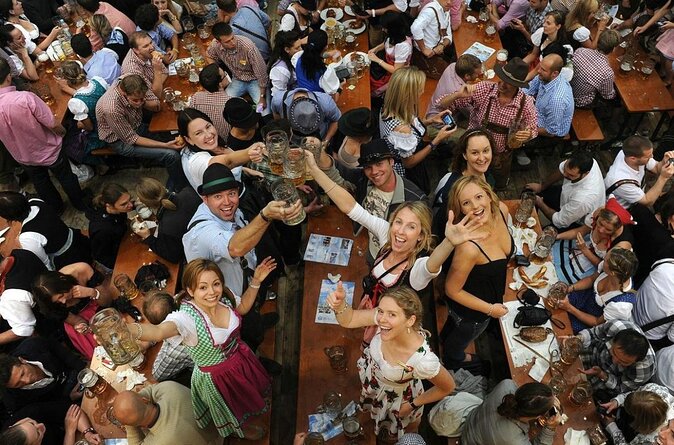
- Two-in-one format: Munich landmarks plus beer heritage and tasting time, so the day feels more than sightseeing.
- Small group privacy: up to 6 people, which makes it easier to ask questions and shift the focus.
- Market stop for real Bavarian cues: Viktualienmarkt gives you food context while you’re still in the city’s center.
- Bier- und Oktoberfest Museum stop: a dedicated time slot to understand how Munich beer culture and Oktoberfest connect.
- Beer tasting is built in, but pay-as-you-go: you control what and how much you drink.
- Dark history included carefully: Odeonsplatz ties the day to the Beer Hall Putsch moment in Munich’s past.
Why this private Munich walk feels different than a standard tour
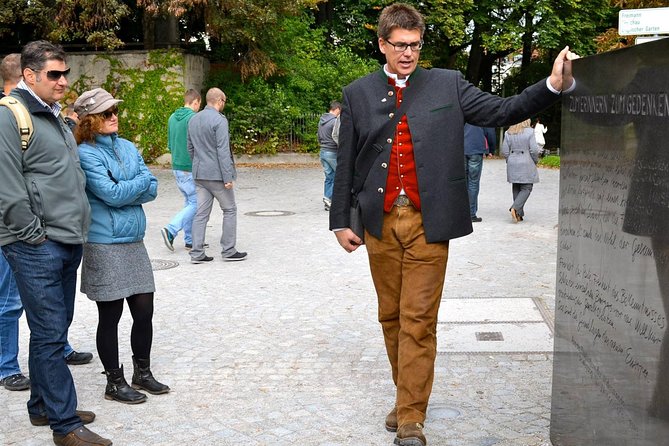
This is the kind of day that works because it doesn’t treat beer as an afterthought. You’re not just checking boxes. You’re learning how Munich became Munich—through places, symbols, and the people who built a brewing culture strong enough to show up in everyday life.
I like that you get both sides: the iconic landmarks that help you get your bearings fast, and the brewing/beer-culture stops that explain the why behind the traditions. And because it’s private, you can nudge the guide toward what you actually want. If you care more about beer history, you can lean into that. If you want more general Munich context, you can steer the pace.
The main consideration is simple: you should plan for walking. This tour is designed around pedestrian areas, and you’ll be moving between stops for most of the day.
You can also read our reviews of more tours and experiences in Munich.


Getting around with pickup, a day pass, and a tight old-town route
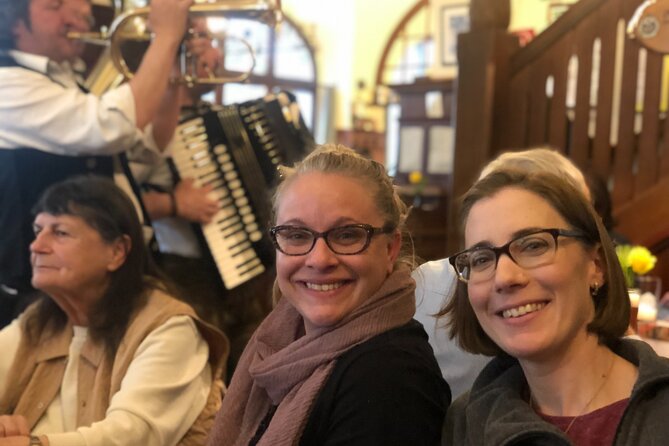
You start at 9:30am near Marienplatz, with the meeting point at Mariensäule, Marienplatz 22, 80331 München. The end point is flexible, and it lands back at Marienplatz.
If you’re staying in the old town or near Hauptbahnhof, pickup is offered, which is a big help when you’re trying to beat jet lag and keep the day smooth. The tour also includes a public transportation day pass if necessary, which matters because Munich is easiest on foot in central areas, but you may still want transit for comfort or weather.
Because the day is walking-focused, bring shoes you’re comfortable in for hours. Also, you’ll want to have small bills or a card ready for pay-as-you-go items, since drinks and museum-related extras aren’t included.
Frauenkirche: the Munich landmark you should see early
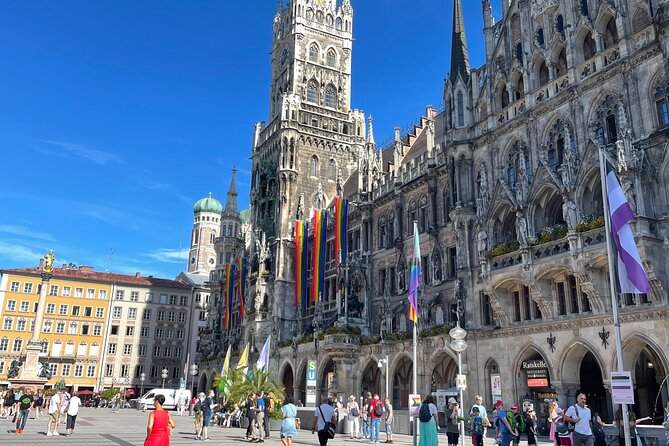
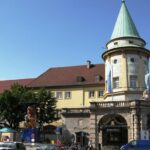
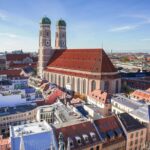
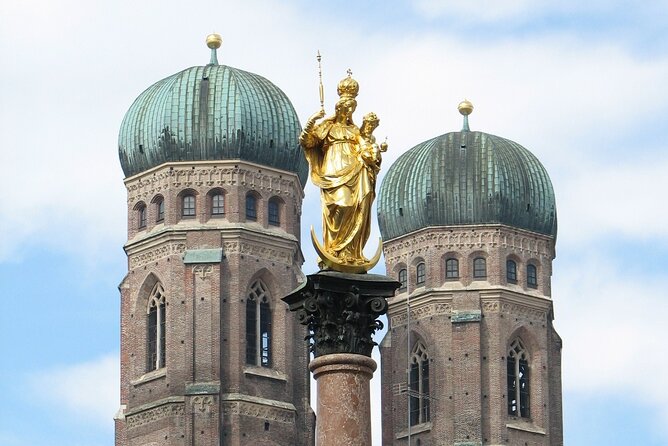
Your first stop is Frauenkirche, the church whose towers and domes are basically the city’s visual signature. You’ll have about 15 minutes here, and there’s no ticket cost listed for this stop.
This is the kind of stop that’s worth doing first because it sets the tone for everything else. When you see the church symbol in person, you start recognizing it in photos, signage, and the city’s skyline. Even if you’re not a church-history buff, it’s a fast way to anchor your mental map.
Since time is limited, keep expectations realistic: you’re there to take in the landmark and let the guide connect it to the broader Munich story, not to turn it into a long museum visit.
Rathaus-Glockenspiel: bells, timing, and what to watch for
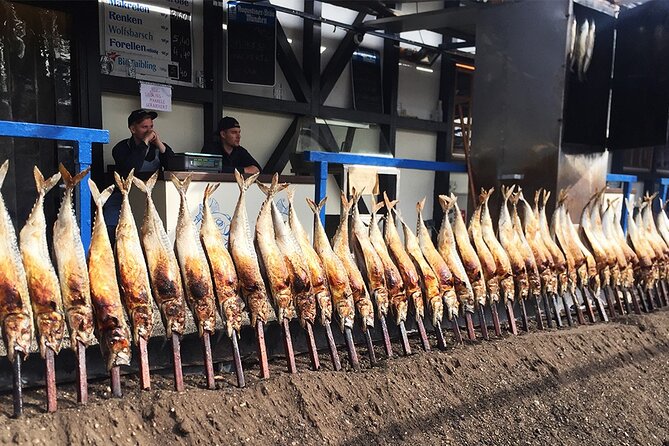
Next up is the Rathaus-Glockenspiel. Expect about 20 minutes at this stop, also with no admission ticket needed.
The key is attention. This is Munich’s famous bell display, and the value here is having someone explain what you’re seeing and when. If you’re the type who normally wanders past moving parts, this is where a guide helps. You’ll know what to look for and how it ties into local identity.
If you’re traveling with kids or teens, this is usually a crowd-pleaser because it’s visual and lively. For adults, it becomes a quick lesson in how city culture gets turned into public spectacle.
Viktualienmarkt: Bavarian food context in an open-air setting
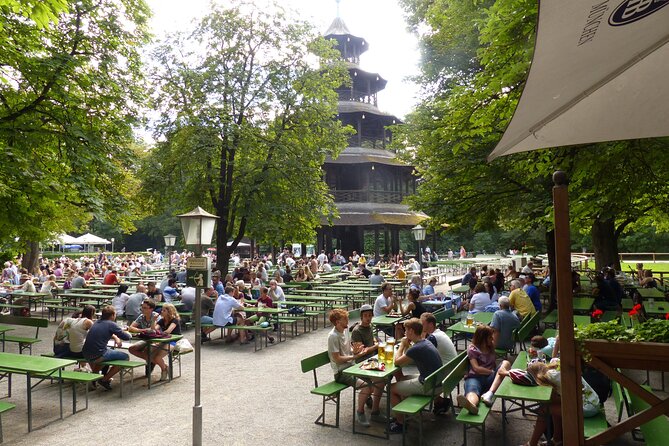
Then you head to Viktualienmarkt, Munich’s open-air market, with about 1 hour on the ground. This stop is listed as free.
I like Viktualienmarkt for exactly one reason: it turns food into atmosphere. You’re not just hearing about Bavarian cuisine in theory. You’re standing in the middle of the market space where that food culture happens day-to-day.
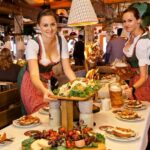
The guide uses this time to talk about Bavarian cuisine—so you’ll get practical context for what you might want to order later. It’s also a good moment to decide what kind of lunch you want, because you’ll see what’s available and how locals think about ingredients.
One drawback: markets can be busy and loud. If you dislike crowds, plan to keep your focus on the food and the conversations, and don’t feel like you have to sample everything.




Bier- und Oktoberfest Museum: beer history plus a tasting stop (with extra cost)
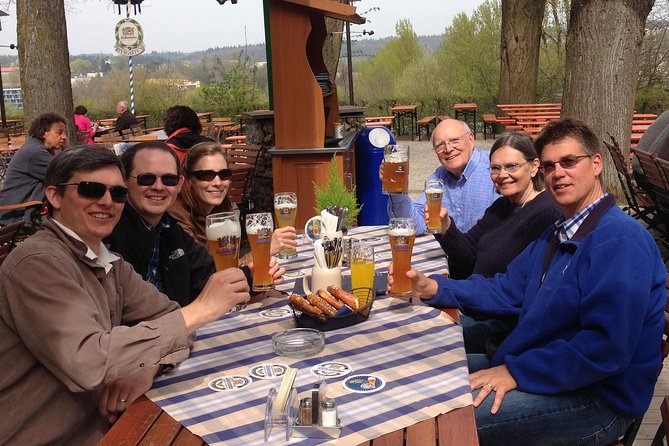
The heart of the beer side comes at the Bier- und Oktoberfest Museum area, paired with a pub/restaurant stop where you can do a Bavarian beer tasting. You’ll spend about 45 minutes here.
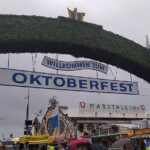
Important: the museum entry is not included, and the beer tasting itself is also own expense. Still, this is one of the best value pieces of the day because it gives you the reason behind what you’re tasting. Without the museum context, beer stops can turn into just another drink break. Here, it’s tied to Munich’s brewing heritage and how that connects to Oktoberfest.
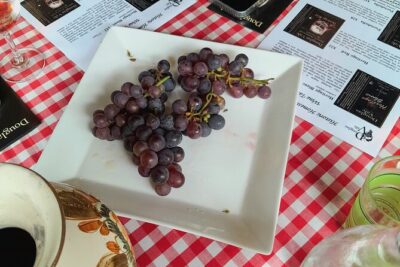
If you’re budgeting, this is where you’ll most likely spend extra. Decide in advance whether you want a couple of beers, a flight-style approach (if offered), or something lighter. Since the beer tasting is pay-as-you-go, you get control over your own pace.
One helpful detail: there’s a minimum drinking age of 16 for beer and wine. That doesn’t just affect who can drink—it also affects whether the timing and restaurant stop feels like a relaxed adult hangout or something more family-oriented.
Odeonsplatz: the darker Munich chapter in one focused stop
You finish with Odeonsplatz, a big square where the Hitler’s Beer Hall Putsch came to a head. This stop is about 15 minutes and is free.
I appreciate that the tour doesn’t pretend Munich history is only charming. This is a short, concentrated stop—enough to acknowledge a key moment tied to the city’s past without turning your day into a long political lecture.
The practical value here is context. When you know that a major historical rupture happened in a specific place, you read the city differently. Even if you’re not into history tours, this stop helps you understand why certain squares and buildings matter.
The consideration is emotional tone. If you’re sensitive to heavy historical material, you might want to be mentally prepared for this part of the walk.
Price and value: what $485.23 per group really means for you
At $485.23 per group (up to 6 people), this tour is very much a shared-experience purchase. If you fill all six spots, your per-person cost drops dramatically. If it’s just you or a couple of people, the cost per person rises fast.
Here’s a simple way to think about value:
- You’re paying for private guidance (so you can ask questions and customize).
- You’re paying for time efficiency across central sights that would take longer to piece together.
- You’re also paying for the beer-cultural context, not just the beer drinking.
Beer itself isn’t included. The museum entry isn’t included. So if your plan is mainly to drink casually, you might question whether a cheaper walking tour would do. But if you want history tied to beer culture—and you care about eating and ordering like a local—this price can make sense, especially with a group.
The strongest praise centers on the guide’s energy and beer passion, plus smart food suggestions that lean toward local rather than overly touristy spots. That’s the kind of guidance that saves you time and money in the long run.
The beer tasting and your day’s pacing: how to avoid a money and timing headache
The tour structure is built so you can enjoy beer culture without turning the entire day into a pub crawl. You’ll have set landmark stops (with free entry listed for several), then a focused museum/restaurant segment for tasting.
Since drinks are pay-as-you-go, your best strategy is to decide your personal “beer budget” early. Ask the guide what’s worth trying based on what you like—lighter vs. richer, or classic styles vs. something more adventurous. Then stick to it.
Also keep pacing in mind. You’re walking for hours, and you still have to enjoy the final square stop. If you go heavy early, you might feel off later. If you’re doing tastings, go steady and treat it as part of the story, not just the main event.
And remember: minimum age rules apply for beer and wine. If you’re traveling with teens, plan around what’s permitted.
Who this tour is best for (and who may want another option)
This tour fits best if you want a smooth, guided first-day or first-city-center day in Munich. It’s also ideal if you like history but don’t want it dry—and if you want beer culture explained in real places.
You’ll probably be happy with it if:
- you’re traveling in a group of up to 6 and can fill the spots,
- you want landmark context plus beer insight,
- you like food stops with local atmosphere,
- you appreciate a guide who can tailor the day.
You might rethink it if:
- you dislike walking for most of the day,
- you’re mostly price-sensitive and don’t plan to add much during the tasting/museum stop,
- you’re traveling with very young kids (it’s not recommended for children aged 12 and under).
Should you book the Private Munich History and Beer Culture Walking Tour?
Yes, book it if you want Munich’s icons with beer culture tied in the same day. This is a practical “see it and understand it” style of experience, and the best part is how the guide’s enthusiasm makes beer feel like part of the city’s identity instead of a side quest.
I’d pass if you want a purely low-cost walking tour or if you’d rather spend your time doing long, standalone museum visits. Also, go in knowing that some costs are on you—museum entry and beer tastings—so bring a budget mindset.
If you’re deciding between “random wandering” and a guided day, this is the option that helps you spend your time better. You’ll leave with a clearer mental map of Munich and a much stronger sense of how brewing culture fits the city.
FAQ
How long is the Private Munich History and Beer Culture Walking Tour?
It runs about 7 to 9 hours.
What is the group size limit?
The tour is private, with a maximum of 6 people per booking.
What does the tour cost?
It costs $485.23 per group (up to 6 people).
Is hotel pickup included?
Yes, hotel pickup is offered for hotels in the old town or Hauptbahnhof area.
What time does the tour start?
It starts at 9:30am.
What attractions do we visit?
You’ll go to Frauenkirche, Rathaus-Glockenspiel, Viktualienmarkt, Bier- und Oktoberfest Museum (with a beer tasting stop), and Odeonsplatz.
Are museum tickets or beer tasting included?
Museum admission and beer tasting are not included. Food and drinks are pay-as-you-go.
Is the tour mostly walking?
Yes. Walking is an integral part of the experience since most sights are in pedestrian-only zones.
What are the age limits?
The minimum drinking age for beer and wine is 16. It is not recommended for children aged 12 and under.
Where do we meet and end?
The start is at Mariensäule, Marienplatz 22, 80331 München. The end is Marienplatz, and the endpoint is flexible.