REVIEW · BOSTON
Boston: Freedom Trail History Tour and Brewery Taste
Book on Viator →Operated by Hub Town Tours · Bookable on Viator
Freedom Trail history can feel like a checklist. This tour strings together 11 of the official stops into one smooth downtown walk, and you get a clear story about the years that led to the American Revolution. I like the small-group format (max 25) and the included brewery lunch and tastings that make it feel like a full morning out, not just a history lecture. The one catch: it’s still a standing-and-walking experience, so if you struggle to stand for long stretches, this may not be your best fit.
You start at Faneuil Hall Marketplace, then move through key sites tied to protests, trials, and power—ending at Democracy Brewing for your food and drinks. Guides I’ve seen named include Gianna, Nick, John, and Jon, and the common thread is a friendly, question-friendly pace that helps you notice details you’d miss on your own.
In This Review
- Key points at a glance
- Walking the Freedom Trail without the backtracking
- Your start at Faneuil Hall Marketplace (and how to find it fast)
- From the Boston Massacre to the Old State House
- Old South Meeting House and the print-to-protest connection
- Boston Latin School, King’s Chapel burial ground, and a different way to picture 1630
- Granary Burying Ground, Park Street Church energy, and the Massachusetts State House
- Boston Common: the shared space that started it all
- Democracy Brewing: beer tasting and a real all-in lunch
- Price and logistics: why $79 can make sense here
- Who should book this tour, and who should skip it
- Should you book Boston Freedom Trail History Tour and Brewery Taste?
- FAQ
- How long is the Boston Freedom Trail History Tour and Brewery Taste?
- What is the price per person?
- Where do I meet the guide?
- Where does the tour end?
- What’s included with the ticket?
- Is the tour only about the Freedom Trail?
- Does this tour visit the North End and Charlestown?
- What language is the tour offered in?
- Do I need to cancel in advance, and what happens if weather is bad?
Key points at a glance
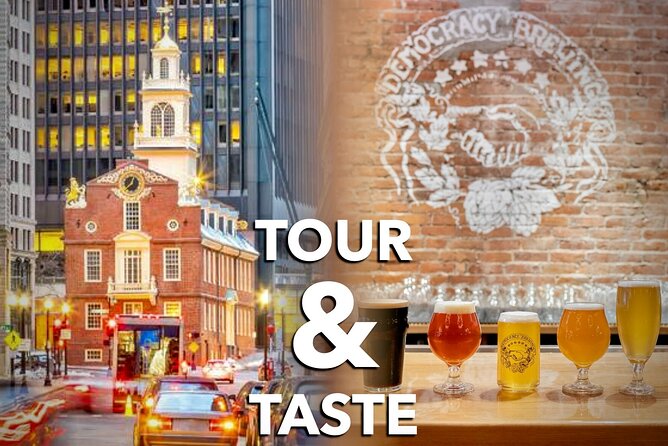
- 11 of 16 official Freedom Trail landmarks handled in one downtown route
- Small group capped at 25, so your questions don’t get lost in the crowd
- Ends at Democracy Brewing for tasting plus an all-inclusive New England lunch
- Revolution-era focus instead of a random collection of stops
- Frequent short breaks built into the walk, with lots of “look right here” moments
- Works well with a half-day plan, since it runs about 2.5 hours
Walking the Freedom Trail without the backtracking
This tour makes the Freedom Trail easier to manage because it keeps you in the core downtown zone. You’ll hit 11 of the 16 official landmarks, while skipping the North End and Charlestown portion. That means less transit time, fewer “which stop is next” moments, and more time spent understanding why the events mattered.
The format also helps. You get a guide to connect the dots—how public meetings, printed words, ship-linked trade, and street-level violence all pile up into revolution. You’ll be on your feet for the full 2 hours 30 minutes, but the stops are short and frequent, so it doesn’t feel like nonstop walking.
You can also read our reviews of more tours and experiences in Boston.


Your start at Faneuil Hall Marketplace (and how to find it fast)

You meet at 121 South Market St in the heart of the tourist core. The simple tip that saves time: look across from Quincy Market for the black-and-white Coach banners, then line up at the Coach-side area near the market.
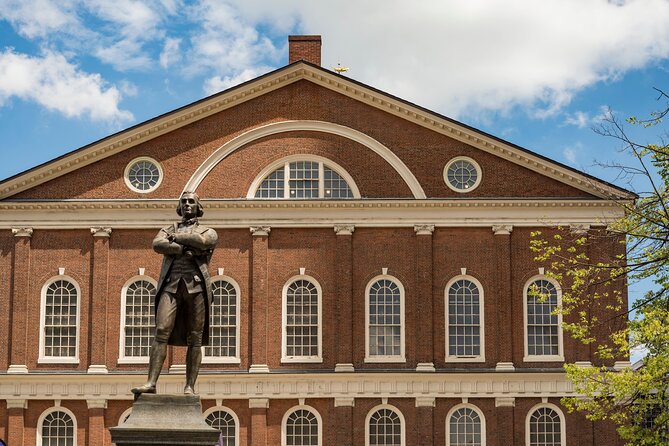
From there, you’re anchored in one of the Freedom Trail’s loudest symbols of public voice. Faneuil Hall is discussed as Boston’s meeting place—the site tied to the idea of the Cradle of Liberty. Even if you’ve read about the Revolution, it’s a different feeling to stand where people argued in public.
Practical note: you’ll get a free stop here, and there’s plenty of background around you—historic market energy, people moving through, and a lot of visual material to point at while the guide explains what happened.
From the Boston Massacre to the Old State House
Next up is the Boston Massacre site, where the story turns from political disagreement into real bloodshed. You’ll pause on the tragedy where British soldiers killed five Bostonians in 1770. It’s one of those moments that explains why trust disappeared so quickly.
Right in the same area, you’ll also connect that scene to the Old State House, described as the colonial capital of the Massachusetts Bay Colony and Boston’s oldest public building (1713). This is where the talk usually shifts from “what happened” to “why this location mattered.” Courts, government announcements, and public life all tie back to this building type—power in a visible place.
If you like history that has cause-and-effect, this segment is a strong one. It’s also short enough that you’re not stuck listening too long before moving again.
Old South Meeting House and the print-to-protest connection
At Old South Meeting House, the tour goes straight to the kind of action that turns words into consequences. The meeting house is tied to Boston Tea Party planning (1773) and is itself an 18th-century landmark (1729). Standing there makes the event feel less like a distant story and more like a local strategy.
You’ll also notice two “bonus” layers nearby. One is the former publishing house of Ticknor & Fields (1718), which is part of how ideas spread. The other is the notion of Boston politics and public life continuing through changing eras—right down to a center of Boston politics for more than a century (noted in the itinerary as 1865).
One possible drawback here: because this portion sits in a concentrated downtown cluster, it can get busy around you. The guide helps by directing your attention, but if you prefer quiet stops, plan to tune out the street noise and focus on what the guide is pointing to.
Boston Latin School, King’s Chapel burial ground, and a different way to picture 1630
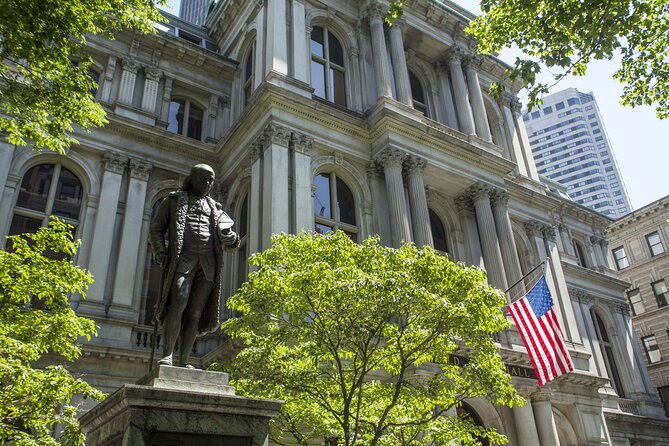
The next segment is all about early Boston—before the Revolution fully took shape. You stop at the Statue of Benjamin Franklin area, and the guide uses it as a jumping-off point for places that show how the city worked.
First comes Boston Latin School (1635), described as the oldest public school in the Americas. That detail matters because it changes the way you picture colonial life: education and civic structure weren’t afterthoughts; they were part of how the community ran.
Then you move toward the oldest Freedom Trail landmark in this section: Boston’s first burying space (1630). This is tied to the King’s Chapel Burial Ground area, which the itinerary frames as the oldest Freedom Trail landmark. If you like historical atmosphere, this stop can hit hard—in a quiet, grounded way—because it reminds you that real people lived and died here long before the gunshots.
You’ll also see the First Church of England in Puritan Boston (1686, 1754) mentioned in the route. Even when a stop is brief, it adds texture: not every Revolutionary story lives in a courtroom or a meeting hall.
Granary Burying Ground, Park Street Church energy, and the Massachusetts State House
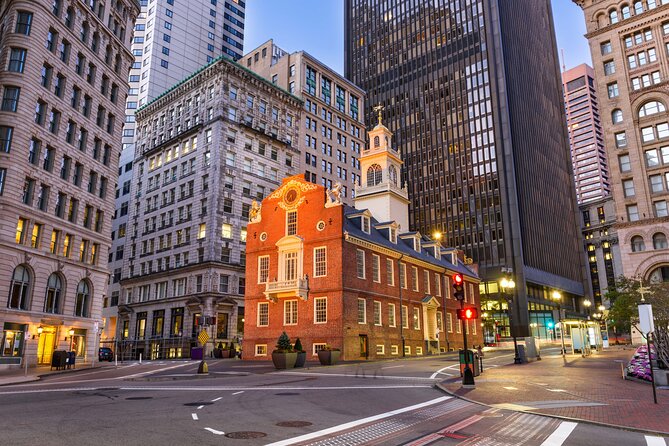
This is where the tour turns more personal. Granary Burying Ground is described as Boston’s third-oldest burying ground and the final resting place for Revolutionary Boston (1660). If the Revolution story sometimes feels abstract, this helps pin it to real lives.
The route also brings in another major Freedom Trail anchor: the Massachusetts State House (1798), called the Hub of the Solar System. That nickname is fun, but the real value is what it signals—how the city planned authority and symbolism through architecture.
In between, you’ll pass an active church and a structure noted as the tallest building in 19th-century Boston (1809). Even without long explanations, that detail helps you understand how skylines reflected status, not just shelter.
This section is often the most memorable part of the tour because it blends big events with everyday reality: people who built the system, people who lost loved ones, and people who shaped what came next.
Boston Common: the shared space that started it all
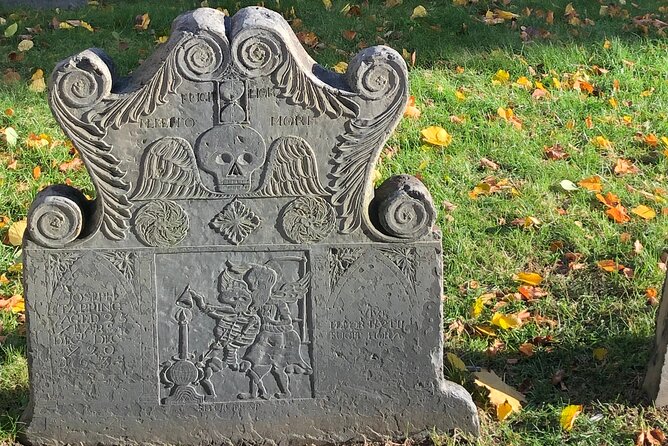
Boston Common is your next stop, and it’s described as the oldest public land in the Americas and the communal grazing pasture (1634). That framing is more useful than it sounds.
Instead of viewing Common only as a pretty green patch, you get why it mattered: it was shared space. Shared space means public meetings, public tensions, and public decisions—exactly the kind of ingredients the guide connects to the Revolution.
The stop is free and short (around 15 minutes), so it works as a breather before your food and drink finale.
Democracy Brewing: beer tasting and a real all-in lunch
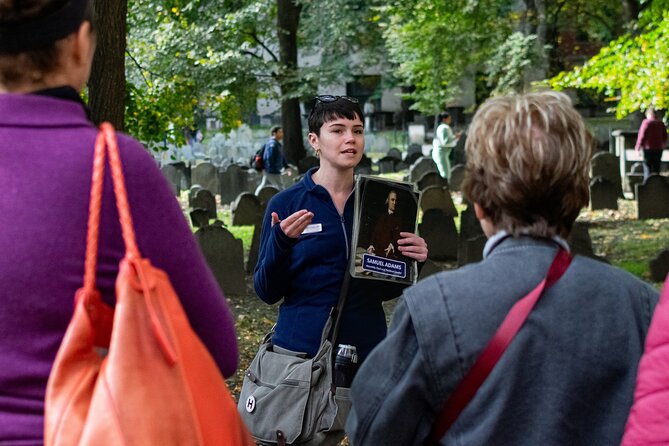
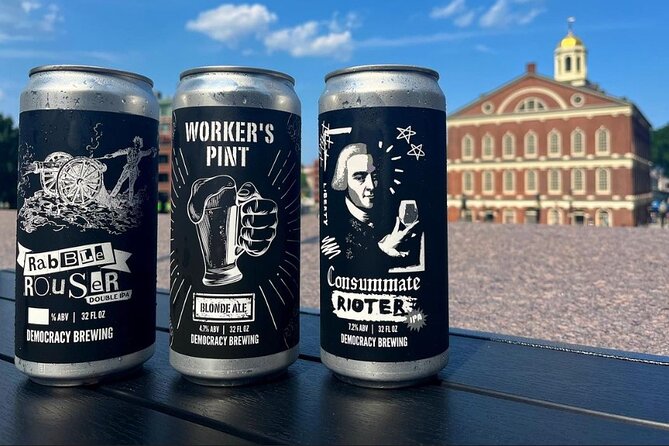
The tour ends at Democracy Brewing, 35 Temple Pl in Boston (inside the brewery). This partner spot is worker-owned, and the vibe is practical: you’re there to eat, taste, and recharge.
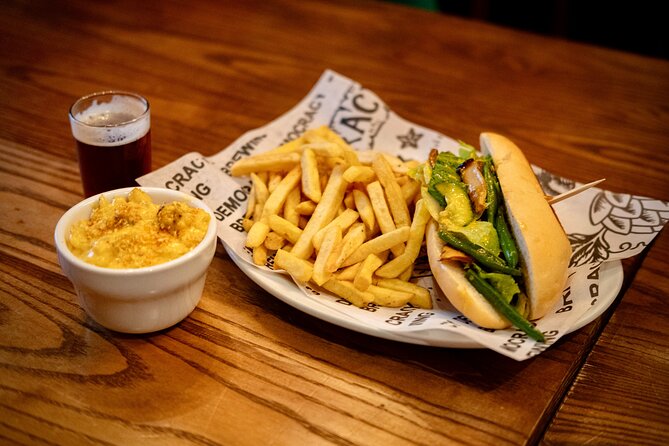
You’ll get beer, seltzer, or mocktail tasting as part of the experience, plus an all-inclusive New England lunch in a private dining room. That combination is a major value point. At $79, you’re paying for both the walking tour and a built-in meal, so the day doesn’t turn into a separate restaurant search after you’re tired.
A few notes that help you plan:
- The tasting gives you options beyond beer, based on the description (beer, seltzer, or mocktail).
- The brewery also has a full restaurant menu, so if the lunch portion leaves you wanting more, you might find additional choices once you’re seated.
- The tour wraps up inside the brewery, which is convenient if the weather turns.
From what I’ve gathered about guides, the closer-to-lunch pacing matters. Guides like Gianna, Nick, John, and Jon are known for friendly delivery and easy question flow, which makes the final stop feel like the payoff rather than an afterthought.
Price and logistics: why $79 can make sense here
At $79 per person for roughly 2.5 hours, this isn’t a budget-only walking tour. But it also isn’t only paying for narration.
You’re getting:
- Coverage of 11 Freedom Trail landmarks
- A guide-led history route
- Beer/seltzer/mocktail tasting
- All-inclusive New England lunch
In other words, your money doesn’t just go toward the time on foot. It also covers the food and the tasting, which are usually the expensive part of “historic day” plans if you’re figuring them out on your own.
Group size helps too. With a cap at 25, you’re less likely to feel invisible. That matters for history tours, because the best moments often come from questions—where the guide can steer you toward what to notice.
One thing to keep in mind: this is a good-weather kind of activity. The experience notes that it requires good weather, and if it’s canceled for weather reasons, you’ll be offered another date or a full refund.
Who should book this tour, and who should skip it
You should book if you want a guided Freedom Trail that stays focused on the Revolution years. You’ll appreciate the structure—short stops, clear connections, and the way the day ends with a proper meal instead of a cliffhanger.
This also fits well if you like downtown Boston logistics that are simple. You meet at Faneuil Hall, you stay mostly in the core, and you end at Democracy Brewing.
You might skip if:
- You can’t stand comfortably for extended periods.
- You’re specifically hoping to cover the North End and Charlestown section of the Freedom Trail, since that part is not included in this route.
Should you book Boston Freedom Trail History Tour and Brewery Taste?
Yes—if your ideal Boston day is history you can understand quickly, plus a meal that doesn’t require planning. The value is strongest in the combo: 11 major stops paired with lunch and tasting at the end.
Book it especially if you like structure and guidance. This route helps you see the Freedom Trail as a connected story, not a list of plaques—and then it gives you somewhere comfortable to sit down and make sense of it all.
FAQ
How long is the Boston Freedom Trail History Tour and Brewery Taste?
It runs about 2 hours 30 minutes.
What is the price per person?
The price is $79.00 per person.
Where do I meet the guide?
You meet at 121 S Market St, Boston, MA 02109, at historic Faneuil Hall Marketplace. Look for the black-and-white Coach banners opposite Quincy Market.
Where does the tour end?
The tour concludes inside Democracy Brewing at 35 Temple Pl, Boston, MA 02111.
What’s included with the ticket?
The ticket includes the Freedom Trail portion (11 of 16 landmarks), a beer/seltzer/mocktail tasting, and an all-inclusive New England lunch.
Is the tour only about the Freedom Trail?
It’s centered on 11 Freedom Trail landmarks, but it also includes local context and stops that help explain the years leading to the American Revolution.
Does this tour visit the North End and Charlestown?
No, those areas are not included.
What language is the tour offered in?
The tour is offered in English.
Do I need to cancel in advance, and what happens if weather is bad?
You can cancel for a full refund up to 24 hours before the experience starts. If the tour is canceled due to poor weather, you’ll be offered a different date or a full refund.